
| Accept Cookies | Customize | Refuse Cookies |
|
 |
 The following opinions have been automatically translated with Microsoft Translator.
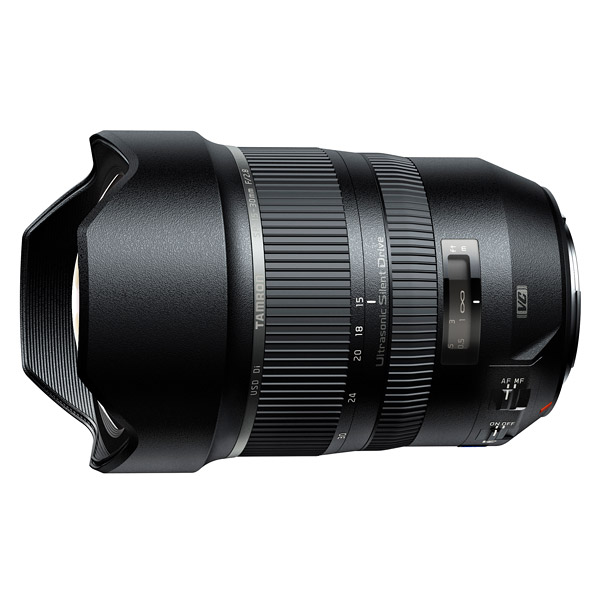 |
Tamron 15-30mm f/2.8 VC USD Pros: Sharpness and IQ in general, low distortions, stabilizer, versatility Cons: What was technically necessary to make a lens of this excursion, aperture and QI, so basically nothing, except perhaps not having it. Opinion: Always finding myself a bit long with zooms that on FF stop at 24mm, I have a couple, the need arose to recover a good wide angle. There were many doubts, starting with the unapproachable costs of the usually most popular models, even in the second-hand sector. Then I realized the existence of this 15-30, which I initially looked at with some uncertainty having never used a Tamron. After a while the classic opportunity that you can't miss presented itself and so I took it, I must say with great satisfaction. For me weight and bulk were not this big problem, being used to Sigma Art of which I own three examples. Of course, the need to use plate filters, always an expensive solution, can be a limit, but if you want the 15 mm at f2.8 with this IQ, there are no other possibilities. The quality of the colors and the ability to focus while practically attached to the subject, be careful not to scratch the lens in this way, are other aspects that pleasantly surprised me. Many have talked about flare, but personally I have never seen any, even with full sun in the frame in mornings with a particularly clear sky. Others spoke of difficulty in focusing. Personally I have not encountered it but perhaps it depends on the combination with the camera body. On Nikon D 810, sometimes squeamish, just use group focus and you are protected from any uncertainty, even framing subjects substantially lacking the visual elements that allow the best locking, such as white marble surfaces. The stabilizer works excellently, which together with the f 2.8 allows you to shoot handheld with excellent results even where with other lenses you would feel you should give up. Although it involves some small sacrifices compared to the more extreme wide-angle lenses, which however hardly offer such contained distortions, the extension is such as to make it almost a kind of all-rounder, as in fact it has become in a short time since the moment of purchase. The only real flaw, perhaps, lies in the poor resistance of the cap to come off, not being of the spring type but simply to be slipped on the external surface of the lens hood, which in turn is fixed. In essence, there is no real locking of the cap, which nevertheless extends quite significantly along the barrel. This means that when you take it out of your bag or backpack, you have to be very careful to grab it firmly from the barrel. Otherwise, thanks to the weight of the lens, you could find yourself with only the cap in your hand, while the rest falls to the ground with the imaginable results. In this regard, one could perhaps have thought of a bayonet cap coupling, but positioned outside the lens hood, so as to avoid potentially catastrophic events. Apart from this I would say that there is nothing else to report, except the large curvature of the front lens, which together with the reduced protrusion of the lens hood makes it rather exposed to accidental contact. The impossibility of mounting screw filters requires you to use the lens with due care. In short, for me the 15-30 was a big surprise that aroused the desire to try other lenses from this manufacturer. Maybe right on the focal lengths to which the products of other brands are unapproachable for my pocket. I therefore hope to recover an 85 f1.8 and maybe even a 70-200 f2.8 which are the missing lenses at a reasonable completion of my kit. sent on 16 Maggio 2026 |
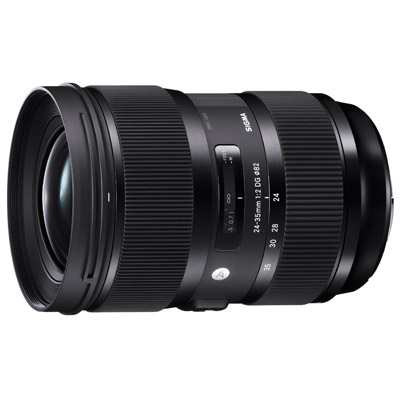 |
Sigma 24-35mm f/2.0 DG HSM Art Pros: All. Cons: It's addictive: after trying it, everything else is looked at with different eyes. Don't have it. Opinion: Lens that is talked about very well, so I found a used specimen at a not impossible price I decided to buy it. I think it was by far the best decision of my entire forgettable career as an amateur photographer. Extreme sharpness, fearsome contrast and colors, relentless AF, general fixed photo quality and even more, so much so that I find it better even than the 50 Art and not by a little. Maybe I should try the 40, always Art, but for only 5 mm difference compared to the maximum focal length of the 24-35 I don't know if it's worth it. It weighs and bulks a lot, but what does it matter if the results you get with its use are so out of the ordinary? In a time frame of 0 he simply nailed himself to the camera body, from which he is immovable from then on. Someone complains about the absence of the stabilizer: in reality, with an aperture of f 2.0, moreover fully usable, it would be of very little use, apart from the fact that it is a compromise device, suitable more than anything else for dark lenses and usable only in a limited range of situations. Needless to mention the sturdiness and finish of the body, the rings and their fluidity, especially compared to certain Nikons of over 1000 euros that look toyy-like. Such a contrast leads some cars to suffer, where the differences between areas of peak summer light, therefore very strong, and areas of shadow are particularly pronounced. Looking at the files taken in similar conditions, at first one is perplexed, except to realize not only that the possibilities of recovery are enormous, even with a DX like the Nikon D 7200, and then to think that these possibilities are given not only by the sensor, as we usually read, but also and above all by the qualities of the lens used. In fact, it has never happened to me to be able to make such recoveries on shots taken with other lenses. Now, actually since the end of 2022, I am finally able to evaluate the potential of my machine's sensor, which is really very high. Of course, the zoom range is not particularly wide, but the 24-35 should be observed for what it is: a lens that offers the classic focal lengths of 24, 28 and 35 in a single body and with exceptional quality, plus all those intermediate between the three mentioned. I just wonder who sold it to me with what they could replace it with. For me, he's still regretting it. It's so sharp, even with moving subjects, that it makes you reconsider the actual need to use mirrorless cameras, with all the contraindications they bring with them, starting with the electronic viewfinder. Rated 11. sent on 26 Giugno 2024 |
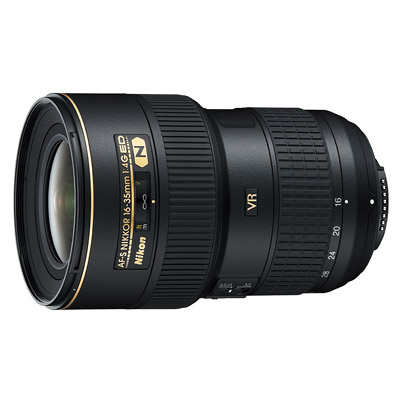 |
Nikon AF-S 16-35mm f/4 G ED VR Pros: Lightweight, beautiful colors, VR, AF so quiet it looks broken. Cons: Price of the new, plasticky, bulky, sharpness that can be improved, problematic in night photos with cameras that are not particularly effective at high ISO, despite the presence of the stabilizer. Opinion: Found at a price you couldn't say no to, it initially made a good impression on me. I took it to add it to a Sigma 17/50 f2.8, which I resold after its purchase, wrongly. Mounted on the D 7200, the millimeter difference on the wide-angle side proved to be significant, even if in the face of geometric distortions that I had never detected on the Sigma. In any case, I wanted to try a relatively modern Nikon lens, to see if it really made a difference compared to those of the competition, as many claim. On the colorimetry, the contrasts and the transitions between the shades in fact nothing to say, but otherwise it did not particularly convince me. Sharpness and definition seemed to me to be in line with the idea I had made in the use of other Nikon lenses, that is, good but not excellent and above all deceptive. In the sense that looking at the file in a not too in-depth way they seem valid, but if you look more carefully they show their limitations, in particular bringing the file to 100%. A series of shots taken at night, albeit with the presence of numerous artificial lights that lightened the scene, forced me to throw away almost all the photos, despite the use of the stabilizer. Maybe I won't be able or I won't have understood the needs of the lens, I know the camera quite well, since I've had it for several years. In that period, however, there was the opportunity of a Sigma ART 24-35 that I decided to take on the fly and, after repeating the night photo session in the same area and in very similar conditions, there was only a minimal amount of photos to be discarded, so to speak physiological. Of course, you basically have to give up the wide-angle side, but for this purpose I took a 10-20 for a laughable price, which also gave me great satisfaction, absolutely and not only depending on the price that was paid. On the 24-35 the stabilizer is not there, but the lack is not felt and above all the leap in photographic quality was simply abysmal. For 70 euros difference from what I then took from the 16-35 there was no need to think about it for a moment. I sold the 16-35 with great difficulty, despite the fact that it was immaculate in everything, including the box, and despite the fact that I offered it at a price well below average. Given the persistent lack of bidders, I tried RCE, which granted me a low amount, if you will, but still higher than what I had paid him. I always find it difficult to part with the photographic objects I own, but the 16-35 is the lens I sold and I regret it the least, that is, not at all. The price at which it was sold when new seems to me frankly out of this world and once again deceptive: such as to make me think of a first-rate lens which, however, corresponds to performance that apart from the colors, the really beautiful ones, I find largely inadequate. On the 7200 equipped with battery grip it made a great impression, but this was matched by a behavior that was too often disappointing. Maybe it doesn't go well with too dense sensors and the one on the 7200 is the densest ever in the entire SLR range. I write this after detecting the positive comments of those who have used it on 16mpx FF sensors. I probably chose the wrong model to test the qualities of Nikon lenses, but as far as I'm concerned Sigma for life, even if they are not Art series. sent on 26 Giugno 2024 |
 JuzaPhoto contains affiliate links from Amazon and Ebay and JuzaPhoto earn a commission in case of purchase through affiliate links.
May Beauty Be Everywhere Around Me

