|
| sent on 07 Febbraio 2026
Pros: Color rendering, Affordable price for a true full frame, Professional constructive feeling
Cons: Insufficient resolution for high crops, AF limited to the center point only, Rear LCD screen not very resolved, Ridiculous operating speed
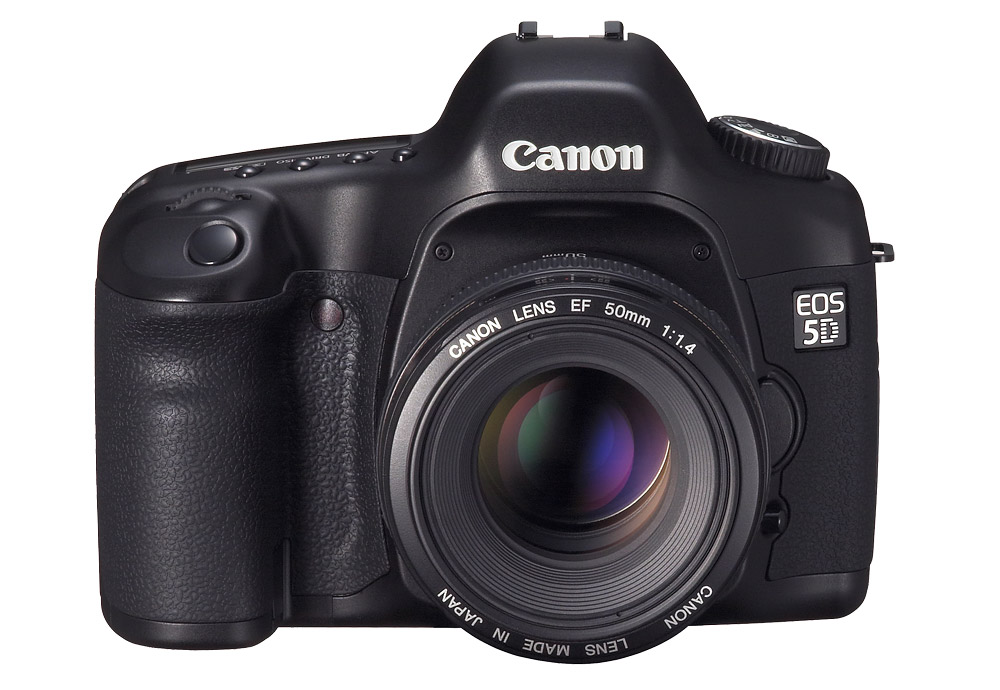
Opinion: Reviewing a reflex camera from over twenty years ago in 2026 is not a nostalgia operation, but a conscious choice. In an era of infinite burst shots and immeasurable resolutions, the first 5D stands as the definitive tool for those looking for slow photography. Despite its age, Canon ergonomics of the time remains a benchmark. It's a solid, no-frills machine that you can grip with confidence. There is no Live View, there is no video: there is only the optical viewfinder, wide and bright, (someone said that it is one of the best built by Canon, I honestly would not be able to evaluate it accurately) that connects you directly with the scene. It is an invitation to take your eyes off the screen and go back to looking at the world through glass. The heart of the 5D is its full-frame sensor. In 2026, its 12.8 megapixels might seem few, but they are "generous" pixels, like liter mugs when compared to today's small glasses, but the technology that manages them does not allow you to get miracles out of them, it requires a lot of precision in exposure and a careful choice of the scene shot. If exposed correctly, the 5D gives spectacular files. Up to ISO 1600 the grain is fine, organic, almost film-like, very different from the clinical digital noise of modern cameras. This camera educates you. With this resolution, cropping is not contemplated. The photo must be composed in the viewfinder: what you see is what you will get. It is a discipline that turns every shot into a deliberate act. There's no point in beating around the bush: 5D is slow by today's standards, but it's a slowness that pays off. Forget eye tracking, here the only way is to rely exclusively on the central point. You focus, recompose and shoot. It is a method that requires precision and knowledge of your equipment. It gives its best with prime lenses, for example mounting a 35mm or a 50mm means enhancing the three-dimensionality typical of this sensor, which seems to handle blurred transitions (bokeh) with a softness that many modern sensors that are too dense have lost. Why choose it today? The Canon 5D Classic is for the photographer who is not in a hurry. It is for those who want to rediscover the pleasure of waiting for the right moment, knowing that when the shutter goes off, the RAW file (or even the direct JPEG) will have a unique plasticity and color depth. p.s.: regarding the small rear LCD screen, I recently saw a video review that explained how setting clarity to maximum (which in any case acts only on a hypothetical jpeg without affecting in any way the RAW obtained) helps to understand if the focus is correct even on this ridiculous LCD. Although honestly I have always prayed not to have taken too fast shots, and to have been careful at least a little, otherwise the photo will have to be trashed. Unfortunately it does not digest the rush well I exhumed it after several years in which I worked with fuji, and immediately, coupled with the old 17-40L it made me cry, if I think of the good old days when it accompanied me with the 24mm, which is why I returned, buying a modern mirrorless hoping to be able to relive the emotions of the past, with the help of new technologies, which have certainly filled the gaps of 2005. 21 years and not feel them, in my humble opinion, if you use your head. 150 euros, I say no more |


 The following opinions have been automatically translated with Google Translate.
![[editors pick]](shared_files/layout/ep_badge.jpg)










 JuzaPhoto contains affiliate links from Amazon and Ebay and JuzaPhoto earn a commission in case of purchase through affiliate links.