|
| sent on 03 Febbraio 2024
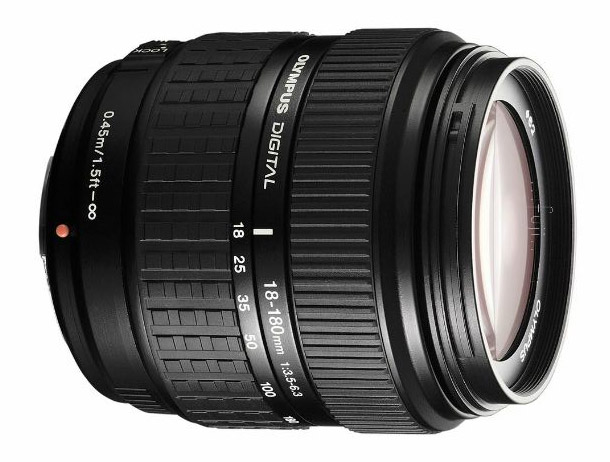
Pros: Focal length extension; compactness; lightness; general image quality in the minimum and intermediate focal lengths; fairly fast focusing (on E-3); lock to prevent extension during transport; lens hood
Cons: plasticky; focal length extension; a bit dark; it decays a bit at the maximum focal length (but you know); the position of the zoom and focus rings;
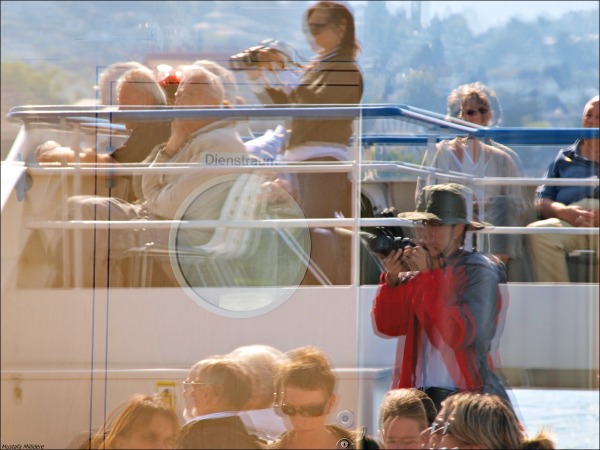
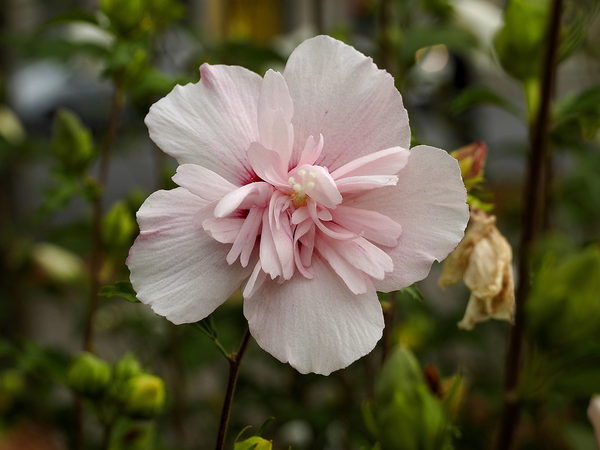
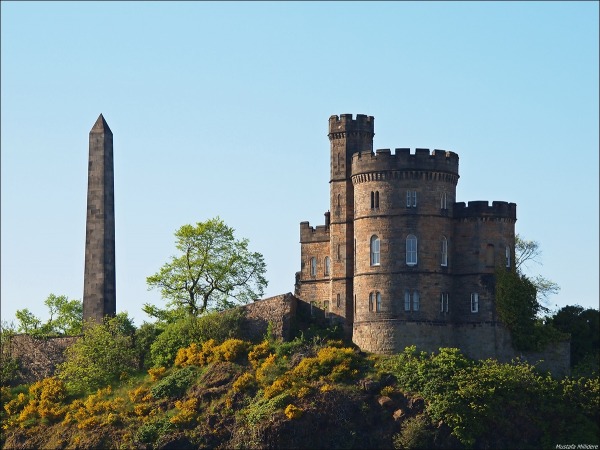
Opinion: Olympus' first (save my ignorance) digital attempt in the field of all-in-one lenses. The first characteristic is the relative difficulty in finding it on the second-hand market, also accompanied by not very flattering reviews. Once you find it, handling it offers a feeling of lightness that is perhaps a little worrying, and it is certainly plasticky; but I didn't have any problems (mounting it on E-3, E-520 and E-M1 first series with Olympus adapter) problems, or warning signs. Retracted, it is not very inbombatory, and a block prevents it from extending by gravity. An unpleasant aspect for me is that the zoom ring is distal to the focus ring. Holding the lens, I instinctively grab it as close as possible to the camera body, to reduce vibrations; So, I interfere with the focus. The focal range is both the strong point and the Achilles' heel: equivalent to a 36 - 360 mm on full frame, it does not offer a real wide angle, or even a superzoom. However, for the open and urban landscape, one of my favorite subjects, it is satisfying. Brightness is not its strong point (quite common in all-in-ones). The colors it renders are rather cool, but correctable, and the sharpness almost up to the maximum focal length is very good. Focusing with sufficient light is quite fast on stationary or slow-moving subjects, and critical on fast subjects. Strangely, on the E-M1 it is slower than on the E-3.- To date, is it worth buying, finding it in good condition, and, before that, finding it (in more than a decade, I have come across only two examples, and the second is the one I use now)? The first consideration concerns the camera body. Created for 4/3 SLRs, it can also be used on mirrorless micro 4-/3. For the former, I recommend use on bodies equipped with stabilization; for the latter, machines that can focus using phase search. A personal thing is the re-evaluation of small and old, but good quality sensors; the 10 mpx of the E-3 is enough for me to present my images on the net, and the 16 mpx of the E-M1 is a luxury. The 18-180 was born for small sensors, and it satisfies them. To date, on the second-hand market, it can cost half of a recent all-in-one (14-150 Olympus and Tamron, or 14-140 Panasonic) and a third of the 12-200 Olympus which is currently redcordman in the category. |


 The following opinions have been automatically translated with Google Translate.


















 JuzaPhoto contains affiliate links from Amazon and Ebay and JuzaPhoto earn a commission in case of purchase through affiliate links.