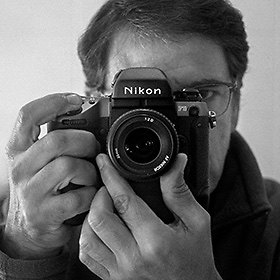
|
| sent on 02 Gennaio 2020
Pros: I review here the M3, the first M model, and not the M2 that came out later. Pro? simply the best 135mm machine ever built by the human being
Cons: has no display meter. but perhaps better. at least it doesn't squander.
Opinion: Ermanno is perfectly right, we are confusing the M2 with the M3 and for such an accurate site that aspires to become a reference is a great flaw: not out of Leicista fetishism but out of respect for a medium that has literally made the history of photography. It's worth repeating it succincly. There was once photography, a cumbersome thing made of means that stood on stand, took a single sheet, and gave great emotions (those were photographers, one on all Vittorio Sella, other than autofocus pixel burst batteries etc). Some geniuses such as Victor Hasselblad and the Leitz lineage tried to make photography an accessible and more agile medium, the first in large format with the fantastic V system, the other had the equally interesting intuition with the format used by kodaks for cinema. As lens and film technology progressed, it was increasingly conceivable to have photos of acceptable quality even with a smaller portion of film. The 135mm, abbreviated 35, with which we still shoot the films with budget and on which are designed the full frame sensors of our technological machines. Leica I, II, III represent the teenage models of the real house, which came to produce the M3, M2, and M1 and then continued with the M4, M5, M6 and M7. Each with the same principle but different peculiarities. The M2, as reported by Ermanno, was less expensive and productively less perfect. In addition, the viewfinder was optimized for the 35, while the M3 is the only one with a 50mm viewfinder with perfect magnification. the M1, even later, did not really have the telemeter for example. The M3 has been THE PHOTOGRAPHY, especially of photojournalism and what today we would call street, or reportage, for decades. Undisputed. Each professional had one to accompany the Rollei bioptic or the aforementioned Hasselblad. More agile, less cumbersome, with 35 poses compared to 12, had net advantages. Henry Cartier Bresson, Capa, Elliot Erwitt and the magnum photographers were shooting with the M3. Before saying that a car is outdated you should be able to take such a picture to Muhammed Ali while without warning throws three shots into the room in the bad light condition of a gym, with telemeter, without an exposition, without possibility to do it https://www.pinterest.it/pin/545428204849182006/ Take such a picture and then you start complaining about autofocus or gusts, or lack of pixels. Maybe if our photo isn't good enough it's because we're neither Ansel Addams nor Capa, and it won't be technology that makes what's in front of us stronger or more iconic. Moreover, until the advent of the cheaper Nikon F, and easier to use perhaps, the telemeter was travel photography, and anyone should confront it once in a lifetime. Moreover, the pleasure of shooting an M3 is still unparalleled today, the taste for the shot itself, I would say. I gave myself one after a lot of years of passion. nothing to take away from my Nikon fm3a, the last real Japanese mechanical reflex, of that lineage that hurt the Germans of Leica so much since the late 60s, but the telemeter shot has in itself characteristics that can not be compared with the reflex system. silence, the leaving part of the photographer's face visible to the subject, the lack of overturning of the mirror and therefore the possibility of avoiding the micromove, the constructive charm of an object that after 60 years is still impeccable. Please add the M3 to the available machines, it is a disretry for all this lack. |



 The following opinions have been automatically translated with Google Translate.






 JuzaPhoto contains affiliate links from Amazon and Ebay and JuzaPhoto earn a commission in case of purchase through affiliate links.