JuzaPhoto uses technical cookies and third-part cookies to provide the service and to make possible login, choice of background color and other settings (click here for more info).

By continuing to browse the site you confirm that you have read your options regarding cookies and that you have read and accepted the Terms of service and Privacy.


OK, I confirm


You can change in every moment your cookies preferences from the page Cookie Preferences, that can be reached from every page of the website with the link that you find at the bottom of the page; you can also set your preferences directly here

Accept Cookies Customize Refuse Cookies
RCE Foto


Login Logout Join JuzaPhoto!


Herero

Namibia

View gallery (19 photos)

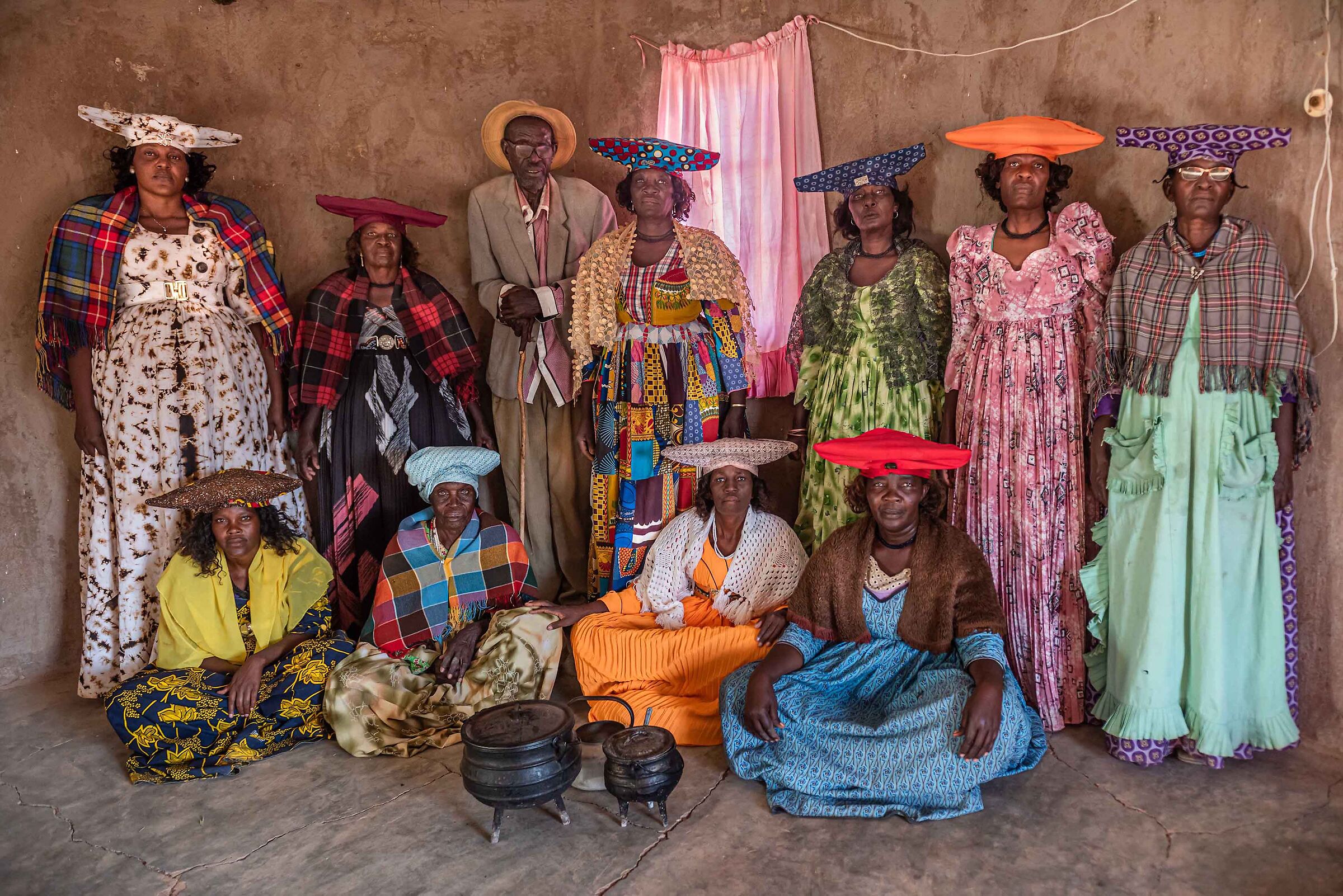
Herero sent on 14 Febbraio 2026 (6:01) by Roberto Pazzi. 0 comments, 140 views.

1/60 f/3.5, ISO 400, hand held.

Herero people (Namibia). HUMANKIND, my premium, limited-edition, museum-quality standard book featuring over 200 large-format photos. Available on my website: https://robertopazziphoto.com The Herero are an ethnic group living mainly in Namibia, with smaller communities in neighboring countries. They number around 250,000 to 300,000 people and are an important ethnic group within Namibia, though not the largest. The Herero traditionally practice cattle herding, and cattle play a central role in their economy, social status, and spiritual life. Wealth and prestige are often measured by the size of one’s herd, and cattle feature prominently in rituals and inheritance systems. Herero women are widely recognized for their distinctive traditional clothing. They wear long, Victorian-style dresses that were originally introduced during the missionary period but later adapted into a symbol of cultural identity. The dresses are usually brightly colored and worn with a characteristic headpiece called the otjikaiva, shaped to resemble cattle horns, again reflecting the importance of cattle in Herero culture. The history of the Herero has been profoundly affected by colonialism. During German colonial rule in the late nineteenth and early twentieth centuries, conflicts over land and power led to extreme violence. Between 1904 and 1908, the Herero population suffered devastating losses in what is now recognized as the Herero and Nama genocide. Despite this traumatic past, the Herero people have preserved their language, traditions, and strong sense of identity, and they continue to play an active role in Namibian society today. Website: https://robertopazziphoto.com Instagram: https://instagram.com/roberto_pazzi_photo


View High Resolution 7.6 MP  


What do you think about this photo?


Do you have questions or curiosities about this image? Do you want to ask something to the author, give him suggestions for improvement, or congratulate for a photo that you really like?


You can do it by joining JuzaPhoto, it is easy and free!

There is more: by registering you can create your personal page, publish photos, receive comments and you can use all the features of JuzaPhoto. With more than 258000members, there is space for everyone, from the beginner to the professional.


RCE Foto

Publish your advertisement on JuzaPhoto (info)

Some comments may have been automatically translated with Microsoft Translator.  Microsoft Translator


 ^

JuzaPhoto contains affiliate links from Amazon and Ebay and JuzaPhoto earn a commission in case of purchase through affiliate links.

Mobile Version - juza.ea@gmail.com - Terms of use and Privacy - Cookie Preferences - P. IVA 01501900334 - REA 167997- PEC juzaphoto@pec.it

May Beauty Be Everywhere Around Me