JuzaPhoto uses technical cookies and third-part cookies to provide the service and to make possible login, choice of background color and other settings (click here for more info).

By continuing to browse the site you confirm that you have read your options regarding cookies and that you have read and accepted the Terms of service and Privacy.


OK, I confirm


You can change in every moment your cookies preferences from the page Cookie Preferences, that can be reached from every page of the website with the link that you find at the bottom of the page; you can also set your preferences directly here

Accept Cookies Customize Refuse Cookies
RCE Foto


Login Logout Join JuzaPhoto!


  1. Galleries
  2. »
  3. Macro and Flora
  4. » Acheronthia atropos
 
Acheronthia atropos

FALENE

View gallery (27 photos)

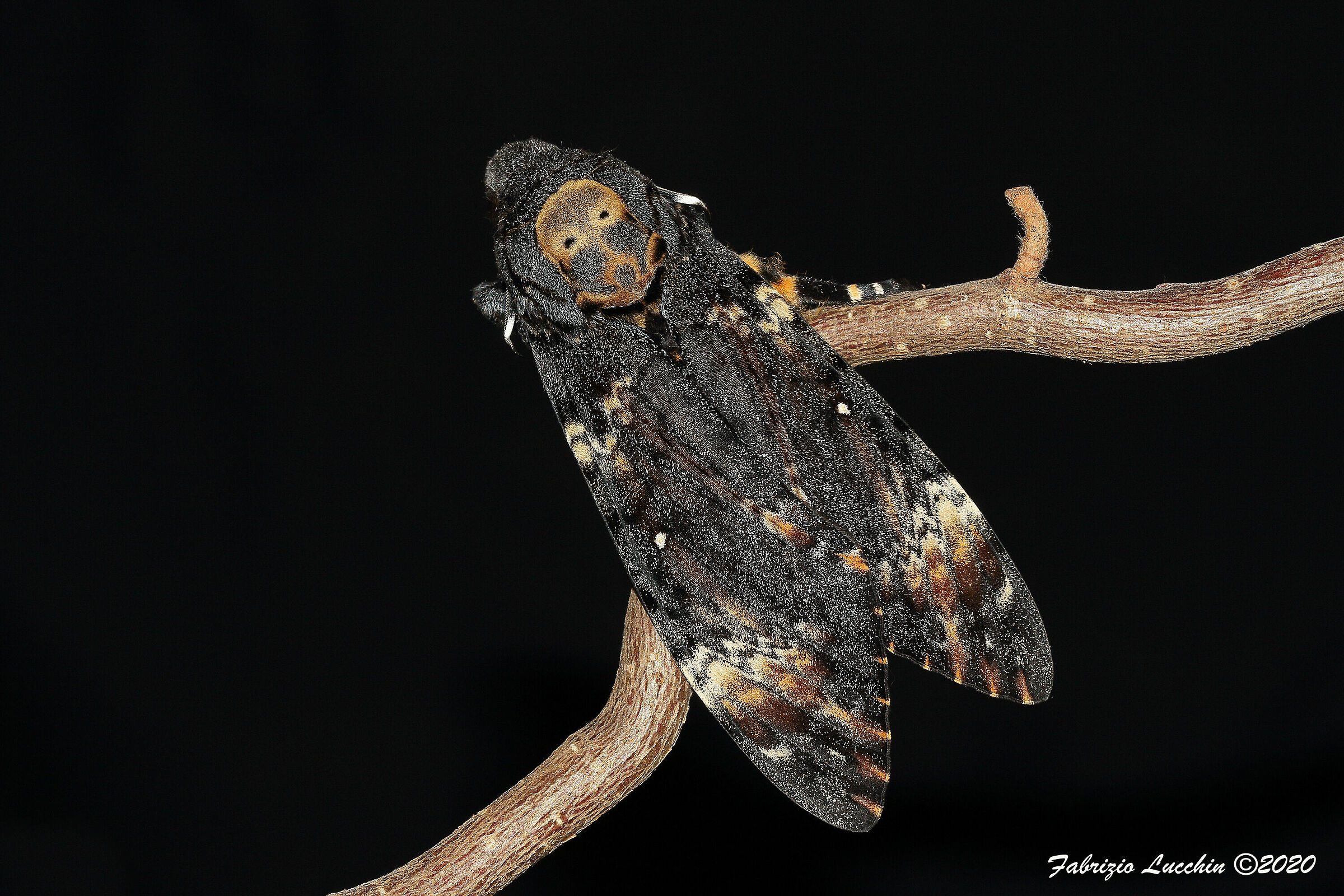
Acheronthia atropos sent on 08 Settembre 2020 (14:15) by Lucchin Fabrizio. 28 comments, 1461 views.

, 1/60 f/14.0, ISO 250, tripod. Specie: Acherontia atropos

La Sfinge testa di morto, allo stadio di bruco è una falena appartenente alla famiglia delle Sphingidae. Il termine “sfinge” si riferisce al fatto che il bruco di questa falena è capace di sollevare la parte anteriore del corpo assumendo una posizione che assomiglia vagamente a quella della sfinge greca o egiziana. L'espressione “testa di morto” è dovuta a un tratto molto caratteristico di questa falena, che la distingue da tutte quelle con cui condivide l'areale: sul lato dorsale del torace spicca una macchia biancastra, con due puntini neri, che ricorda la forma di un teschio. Il ciclo vitale di questa specie vede svilupparsi un numero variabile di generazioni (1-3) nel corso dell'anno. Si tratta quindi di una specie multivoltina. I cicli di covata si susseguono in continuo nelle popolazioni africane, mentre nelle regioni più settentrionali dell'areale la sfinge testa di morto sverna allo stadio pupale, come crisalide nel terreno. Le uova sono di colore verde o grigio-blu e vengono deposte singolarmente sulla pagina abassiale delle foglie delle piante ospiti. Al momento della schiusa, che può avvenire da luglio a ottobre, la larva o bruco ha una colorazione verde chiara, che tende a scurirsi mano a mano che l'animale si nutre, delle bande gialle diagonali sui lati e un cornetto nero sull'ottavo segmento addominale, all'estremità della coda. Al secondo stadio, sul dorso del bruco compaiono numerose piccole spine. Nel terzo stadio larvale le bande diagonali gialle sviluppano dei margini violacei o blu e il cornetto caudale da nero e liscio diventa giallo e granuloso, ricurvo verso il basso. Nello stadio finale le spine sul dorso scompaiono e la larva è lunga 13–15 cm, ha un aspetto robusto e può assumere tre diverse colorazioni: verde, marrone o gialla. Il bruco si muove poco, solo in cerca di foglie fresche di cui nutrirsi, e fa schioccare le mandibole o arriva addirittura a mordere se viene minacciato. Effettuando 4 ecdisi nel corso di circa 20 giorni, la larva cresce fino a una lunghezza di 120–130 mm e poi scava un buco nel terreno e si impupa in un bozzolo molto fragile, lungo 1,5–4,0 cm situato all'interno di una camera profonda. La crisalide o pupa è liscia, lucida e color mogano tendente al rossastro[3]. La falena nella sua forma adulta o immagine emerge dal terreno dopo una metamorfosi completa che può durare da 20 a 60 giorni. Un grazie alla mia amica Paola che lo ha trovato nel suo orto intento a mangiarle le foglie di papate e mi ha subito chiamato.


View High Resolution 6.0 MP  


PAGE: « PREVIOUS PAGE | ALL PAGES |


What do you think about this photo?


Do you have questions or curiosities about this image? Do you want to ask something to the author, give him suggestions for improvement, or congratulate for a photo that you really like?


You can do it by joining JuzaPhoto, it is easy and free!

There is more: by registering you can create your personal page, publish photos, receive comments and you can use all the features of JuzaPhoto. With more than 258000members, there is space for everyone, from the beginner to the professional.


avatarsupporter
sent on 14 Settembre 2020 (13:06) | This comment has been automatically translated (show/hide original)    

Gios
Roberto
thank you for the compliments, my best wishes, cheers Fabrizio

avatarsenior
sent on 11 Novembre 2020 (16:46) | This comment has been automatically translated (show/hide original)    

pleasant moth, composition in question very well detailed, compliments greetings from Mark

avatarsupporter
sent on 11 Novembre 2020 (20:43) | This comment has been automatically translated (show/hide original)    

Thanks Marco, my best wishes and Good evening, cheers Fabrizio

avatarsupporter
sent on 24 Marzo 2021 (18:20) | This comment has been automatically translated (show/hide original)    

A fantastic shot Fabrizio :-)

avatarsupporter
sent on 24 Marzo 2021 (19:16) | This comment has been translated    

Wow!

avatarsupporter
sent on 25 Marzo 2021 (12:05) | This comment has been automatically translated (show/hide original)    

Claudio
Andrea
Thank you of the positive comments to this moth although a bit macabre, given the good appetite, hello Fabrizio

avatarsupporter
sent on 25 Marzo 2021 (14:35) | This comment has been automatically translated (show/hide original)    

:-D Worse, I could have seen the news....
:-D :-D :-D

avatarsupporter
sent on 25 Marzo 2021 (15:43) | This comment has been automatically translated (show/hide original)    

Beautiful this... ironic joke as true as ever, hello Fabrizio


RCE Foto

Publish your advertisement on JuzaPhoto (info)

Some comments may have been automatically translated with Microsoft Translator.  Microsoft Translator


PAGE: « PREVIOUS PAGE | ALL PAGES |


 ^

JuzaPhoto contains affiliate links from Amazon and Ebay and JuzaPhoto earn a commission in case of purchase through affiliate links.

Mobile Version - juza.ea@gmail.com - Terms of use and Privacy - Cookie Preferences - P. IVA 01501900334 - REA 167997- PEC juzaphoto@pec.it

May Beauty Be Everywhere Around Me