What do you think about this photo?
Do you have questions or curiosities about this image? Do you want to ask something to the author, give him suggestions for improvement, or congratulate for a
photo that you really like?
You can do it by joining JuzaPhoto, it is easy and free!
There is more: by registering you can create your personal page, publish photos, receive comments and you can use all the features of JuzaPhoto.
With more than 260000members, there is space for everyone, from the beginner to the professional.
|
|
sent on 14 Ottobre 2017 (14:19) | This comment has been automatically translated (show/hide original)
Giovanni finally photos of ...... night ;-) Giovanni finalmente foto di...... notte  |
|
|
sent on 16 Ottobre 2017 (16:42) | This comment has been automatically translated (show/hide original)
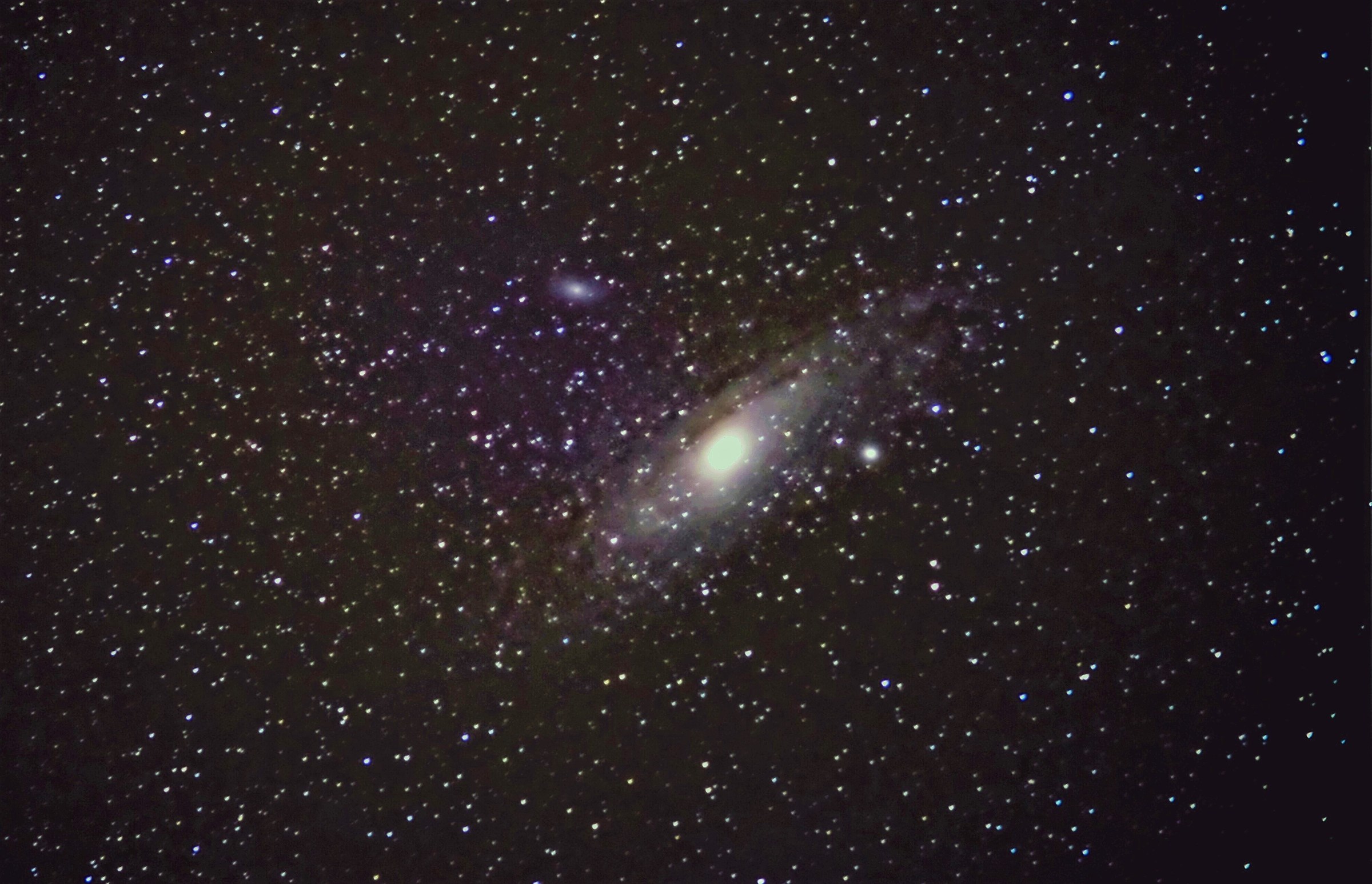
The shot is definitely improved ..... good as a start .... I think this shot has adversely affected an unsuccessful pursuit.
I do not know if it depends on an incorrect polar station or by a poorly guided guide .... Certainly with a 400mm (600mm equivalent) focus and tracking focus must necessarily be very accurate.
In my opinion you dared too much with the sensitivity .... but do not take what I say as gold cast, there are more experienced users of me in digital astroimaging .... I stopped in the film for this kind of shots!
As a first attempt you still got an encouraging result ... for the improvements there is time! Lo scatto è sicuramente migliorabile.....buono come inizio....credo che in questo scatto abbia influito negativamente un inseguimento non perfetto.
Non so se dipenda da uno stazionamento polare errato o da una guida poco precisa....certo che con una focale di 400mm (600mm equivalente) stazionamento e inseguimento devono necessariamente essere molto molto precisi.
Secondo me hai osato troppo anche con la sensibilità....ma non prendere quello che dico come oro colato, ci sono utenti molto più esperti di me in astroimaging digitale....io mi sono fermato alla pellicola per questo genere di scatti!
Come primo tentativo hai ottenuto comunque un risultato incoraggiante...per i miglioramenti c'è tempo! |
user44198
|
sent on 16 Ottobre 2017 (23:33)
ciao Kiril,innanzi tutto bravo per provare ad immortalare il cielo e tutte le sue grandi cose che nasconde all'occhio senza una strumentazione adeguata,continua il cielo ci chiama!!
per quel che riguarda la tua foto inizio con il dirti di non camminare vicino al treppiede mentre la fotocamera riprende il cielo!! ti dico questo perché la forma delle stelle dice questo anch'io all'inizio mi muovevo vicino al telescopio mentre facevo le foto e le stelle avevano la stessa forma!! poi curerei bene la messa a fuoco,per il resto con solo 6 minuti totali di esposizione non si può pretendere altro,ma ti debbo raccomandare di abbassare la sensibilità,a 800 iso è più che sufficiente,intanto le stelle non si espandono come con i 3200 iso in più conservano un pò di colore senza correre il rischio di renderle tutte monocromatiche...
per il futuro inserisci più dati affinché ti si possa dare più consigli mirati ,per esempio il tipo di montatura usata con cosa elabori,insomma più informazioni.
Cerca di non demoralizzarti se all'inizio i risultati stentano ad arrivare,questa è una passione dove la pazienza e la costanza giocano un ruolo preminente per il prosieguo 
un saluto
Riccardo ciao Kiril,innanzi tutto bravo per provare ad immortalare il cielo e tutte le sue grandi cose che nasconde all'occhio senza una strumentazione adeguata,continua il cielo ci chiama!!
per quel che riguarda la tua foto inizio con il dirti di non camminare vicino al treppiede mentre la fotocamera riprende il cielo!! ti dico questo perché la forma delle stelle dice questo anch'io all'inizio mi muovevo vicino al telescopio mentre facevo le foto e le stelle avevano la stessa forma!! poi curerei bene la messa a fuoco,per il resto con solo 6 minuti totali di esposizione non si può pretendere altro,ma ti debbo raccomandare di abbassare la sensibilità,a 800 iso è più che sufficiente,intanto le stelle non si espandono come con i 3200 iso in più conservano un pò di colore senza correre il rischio di renderle tutte monocromatiche...
per il futuro inserisci più dati affinché ti si possa dare più consigli mirati ,per esempio il tipo di montatura usata con cosa elabori,insomma più informazioni.
Cerca di non demoralizzarti se all'inizio i risultati stentano ad arrivare,questa è una passione dove la pazienza e la costanza giocano un ruolo preminente per il prosieguo
un saluto
Riccardo |
|
|
sent on 17 Ottobre 2017 (8:54)
Ecco vedi....un consiglio da un esperto come Vega mette in luce possibili difetti che non potrebbero venire in mente a tutti. Non avevo pensato al fatto che camminare intorno agli strumenti potesse indurre vibrazioni tali da peggiorare lo scatto. In effetti a pensarci bene è verissimo! Tanto per farti un esempio, utilizzando il mio telescopio per osservazioni, dal terrazzo di casa, anche il semplice spostamento d'aria di una macchina che passa sotto la strada a certi ingrandimenti fa oscillare talmente tanto lo strumento da far uscire il soggetto osservato dal campo visuale dell'oculare (questo si verifica a circa 500 ingrandimenti...ma l'effetto sarebbe comunque deleterio anche in fotografie con focali come quella da te utilizzata). Ora....va anche detto che la montatura di cui dispongo io non è proprio solidissima, trattandosi di una montatura a forcella ma, bisogna capire che questo tipo di lavori richiede tantissima attenzione e pazienza.
Perciò avanti e non ti scoraggiare. Ecco vedi....un consiglio da un esperto come Vega mette in luce possibili difetti che non potrebbero venire in mente a tutti. Non avevo pensato al fatto che camminare intorno agli strumenti potesse indurre vibrazioni tali da peggiorare lo scatto. In effetti a pensarci bene è verissimo! Tanto per farti un esempio, utilizzando il mio telescopio per osservazioni, dal terrazzo di casa, anche il semplice spostamento d'aria di una macchina che passa sotto la strada a certi ingrandimenti fa oscillare talmente tanto lo strumento da far uscire il soggetto osservato dal campo visuale dell'oculare (questo si verifica a circa 500 ingrandimenti...ma l'effetto sarebbe comunque deleterio anche in fotografie con focali come quella da te utilizzata). Ora....va anche detto che la montatura di cui dispongo io non è proprio solidissima, trattandosi di una montatura a forcella ma, bisogna capire che questo tipo di lavori richiede tantissima attenzione e pazienza.
Perciò avanti e non ti scoraggiare. |
|
|
sent on 17 Ottobre 2017 (13:17) | This comment has been automatically translated (show/hide original)
AHahahahahah .... the field experiences are a gym for the muscles and the mind.
I remember one night trying to keep the telescopes with a group of friends .... as soon as we were close to perfection it was raining, we do not know where from then .... the sky was almost completely mauled except for the famous cloud fantoziana. At that ..... telescopes flipped in bauliera (with the risk of doing great damage) ... two minutes and again the skies sky and so on for 5/6 consecutive times .... in the end we put take pictures of the lightning they saw on the horizon ... far away ... The sky above us was mahogany but you want the time, you want the anger, we stopped trying. AHahahahahah....le esperienze sul campo sono una palestra per i muscoli e per la mente.
Ricordo una nottata a cercare di stazionare i telescopi con un gruppo di amici....non appena eravamo vicini alla perfezione cominciava a piovere, non si sa da dove poi....il cielo era quasi completamente sgombro tranne che per la famosa nuvoletta fantoziana. Al che.....telescopi volati in bauliera (col rischio anche di far danni ingenti)...due minuti e di nuovo il cielo sgombro e così via per 5/6 volte consecutive....alla fine ci siamo messi a far foto ai fulmini che si vedevano all'orizzonte....lontanissimi...Il cielo sopra di noi era sgombro ma vuoi l'ora, vuoi la rabbia, abbiamo smesso di tentare. |
user44198
|
sent on 17 Ottobre 2017 (13:33) | This comment has been automatically translated (show/hide original)
and I believe you .... :-D :-D :-D e te credo.... |
|
|
sent on 19 Ottobre 2017 (13:42) | This comment has been automatically translated (show/hide original)
Thank you all for the valuable advice. I will try to put them into practice. The frame is a HEQ5 used without a guide. For the shape of the stars it seemed to me that there was some coma caused by the focal gear reducer to bring the lens to the actual 400 mm focal plane. Maybe I had to close the diaphragm of a couple of stops. Thanks again for the advice.
Grazie a tutti per i preziosi consigli. Cercherò di metterli in pratica. La montatura è una HEQ5 usata senza guida. Per la forma delle stelle a me sembrava, presente anche un pò di coma causato forse dal riduttore di focale per portare l'obbiettivo alla focale di 400 mm effettivi. Forse dovevo chiudere il diaframma di un paio di stop. Grazie ancora per i consigli.
|
|
|
sent on 19 Ottobre 2017 (16:31) | This comment has been automatically translated (show/hide original)
Coma is an optical defect that appears cassock to the edges of the image and develops "tail" radically with respect to the center of the image. Here, however, "tail" has the same direction throughout the frame .... a sign of a tracking error or vibration or poor stability ... as described by Vega. Il coma è un difetto ottico che si presenta casomai ai bordi dell'immagine e sviluppa "la coda" in modo radiale rispetto al centro dell'immagine. Qui invece "la coda" ha la stessa direzione in tutto il fotogramma....segno di un errore di inseguimento o di problemi di vibrazione o di poca stabilità....come descritto da Vega. |
|
|
sent on 19 Ottobre 2017 (18:05) | This comment has been automatically translated (show/hide original)
I checked the frame and found the polar telescope not perfectly aligned. Could it have caused an inappropriate mount of the frame, with the consequences on the stars? Ho controllato la montatura e ho trovato il cannocchiale polare non perfettamente allineato. Può aver causato un non buon stazionamento della montatura, con le conseguenze sulle stelle ? |
|
|
sent on 19 Ottobre 2017 (18:46)
immagine non puntiforme....potrebbe essere quello la causa o concausa di una immagine stellare come quella da te ottenuta in questa immagine. In questo genere di fotografia tutto deve essere perfetto e perfettamente regolato. A causa delle lunghe focali in gioco infatti, ogni piccolo scostamento dalla "perfezione", ha effetti sempre più visibili man mano che aumentiamo la focale.
La tua montatura è motorizzata anche se non utilizzi inseguimenti automatizzati?
lo chiedo perchè per minimizzare eventuali errori di inseguimento, se fai correzioni in manuale, dovresti usare un'ottica parallela con ingrandimenti molto più forti di quelli indotti dall'ottica con cui effettui lo scatto.
Per farti un esempio....se guardi la mia galleria... trovi un'immagine fatta nel campo della Via Lattea sulle costellazioni di Cigno e Lira. Per fare quella foto ho usato un tempo di posa di 15 minuti (su pellicola ma questo poco importa) e la configurazione era la seguente: apparato di ripresa composto da corpo macchina + obiettivo 50mm f1,7 a tutta apertura montato su telescopio (utilizzato come guida visuale) meade 2120 (2500 mm di focale) con oculare da 9 mm con reticolo illuminato (280 ingrandimenti circa, che andrebbero bene, probabilmente, anche per fotografare con un ottica da 500 mm montata su corpo macchina).
Il telescopio da me utilizzato ha motori su entrambi gli assi comandati da pulsantiera e non automatizzati con autoguida. Le pose hanno bisogno di correzioni costanti per tutta la durata dello scatto (tante più quanto meno preciso è lo stazionamento). In pratica bisogna stare con l'occhio fisso all'oculare e correggere la posizione non appena ci si accorge di uno scostamento della stella guida dal centro del reticolo. Le correzione vanno fatte con la pulsantiera e non con le manopole...altrimenti si rischia di innescare vibrazioni dannose per la fotografia. immagine non puntiforme....potrebbe essere quello la causa o concausa di una immagine stellare come quella da te ottenuta in questa immagine. In questo genere di fotografia tutto deve essere perfetto e perfettamente regolato. A causa delle lunghe focali in gioco infatti, ogni piccolo scostamento dalla "perfezione", ha effetti sempre più visibili man mano che aumentiamo la focale.
La tua montatura è motorizzata anche se non utilizzi inseguimenti automatizzati?
lo chiedo perchè per minimizzare eventuali errori di inseguimento, se fai correzioni in manuale, dovresti usare un'ottica parallela con ingrandimenti molto più forti di quelli indotti dall'ottica con cui effettui lo scatto.
Per farti un esempio....se guardi la mia galleria... trovi un'immagine fatta nel campo della Via Lattea sulle costellazioni di Cigno e Lira. Per fare quella foto ho usato un tempo di posa di 15 minuti (su pellicola ma questo poco importa) e la configurazione era la seguente: apparato di ripresa composto da corpo macchina + obiettivo 50mm f1,7 a tutta apertura montato su telescopio (utilizzato come guida visuale) meade 2120 (2500 mm di focale) con oculare da 9 mm con reticolo illuminato (280 ingrandimenti circa, che andrebbero bene, probabilmente, anche per fotografare con un ottica da 500 mm montata su corpo macchina).
Il telescopio da me utilizzato ha motori su entrambi gli assi comandati da pulsantiera e non automatizzati con autoguida. Le pose hanno bisogno di correzioni costanti per tutta la durata dello scatto (tante più quanto meno preciso è lo stazionamento). In pratica bisogna stare con l'occhio fisso all'oculare e correggere la posizione non appena ci si accorge di uno scostamento della stella guida dal centro del reticolo. Le correzione vanno fatte con la pulsantiera e non con le manopole...altrimenti si rischia di innescare vibrazioni dannose per la fotografia. |
user44198
|
sent on 19 Ottobre 2017 (19:04) | This comment has been automatically translated (show/hide original)
but why go looking for the causes where I am not ?? the stars of that shape on the whole frame imply VIBRAZIONI and nothing else .... mistakes due to a bad alignment affects the long poses causing a nice rotation of the field that has nothing to do with what happened to you ...
ma perché andare a cercare le cause dove non sono?? le stelle di quella forma su tutto il frame implica VIBRAZIONI e nient'altro....gli errori dovuti ad un cattivo allineamento si ripercuote sulle lunghe pose causando una belle rotazione di campo che non ha niente a che vedere con quello che ti è successo...
|
|
|
sent on 19 Ottobre 2017 (23:22) | This comment has been automatically translated (show/hide original)
The frame is HEQ5 with SYNSCAN. I used only frame timing tracking without manual corrections, with the camera in parallel to a skywatcher of 70-500. It is likely that I accidentally touched the telescope during the photo. La montatura è la HEQ5 con SYNSCAN. Ho usato soltanto l'inseguimento orario della montatura senza correzioni manuali, con la macchina fotografica in parallelo a un70-500 della skywatcher. È probabile che ho toccato inavvertitamente il telescopio durante la foto. |
user44198
|
sent on 19 Ottobre 2017 (23:51) | This comment has been automatically translated (show/hide original)
precisely, that is a way of causing annoying vibrations, what I ask you is, where do you put it while shooting? appunto,quello è un modo di provocare delle vibrazioni fastidiose,quello che ti chiedo io è,dove ti metti mentre fai le riprese? |
|
|
sent on 20 Ottobre 2017 (16:22) | This comment has been automatically translated (show/hide original)
I'm going to look for the causes where I'm not going to invoke your advice Vega ... :-D Vado a cercare le cause dove non sono per invocare il tuo consiglio Vega... |
|
|
sent on 20 Ottobre 2017 (17:09) | This comment has been automatically translated (show/hide original)
I have considered your observations and going for exclusion, I think I have identified the leaders of the shape and size of the stars.
As you may have already understood, I come from film photography.
But some habits do not agree with astrophysics.
the first mistake I used was the mechanical flexible cable to start the photo;
Perhaps it is best to use only the electronic shutter off the mechanical one;
Another factor, which I think has influenced the size of the stars, may have been slightly forced processing.
Of the programs devoted to photography, I used only stackers and photo-processing programs for corel or photoshop.
Usually the frame is resting on a solid cement base in the garden, looseno big cities. Ho considerato le vostre osservazioni e andando per esclusione credo di aver individuato i responsabili della forma e delle dimensioni delle stelle.
Come forse avrete già capito, io provengo dalla fotografia a pellicola.
Ma alcune abitudini non vanno daccordo con l'astrofotografia.
il primo errore ho usato il cavetto flessibile meccanico per dare inizio alla foto;
Forse e meglio usare soltanto l'otturatore elettronico escludendo quello meccanico;
Altro fattore, che credo abbia influenzato la dimenzione delle stelle, può essere stata l'elaborazione un po forzata.
Dei programmi dedicati all'astrofotografia ho usato soltanto staker e programmi per elaborazione foto tipo corel o photoshop.
Di solito la montatura e poggiata su una solida base di cemento in giardino, lontano da grandi città. |
|
|
sent on 20 Ottobre 2017 (18:27) | This comment has been automatically translated (show/hide original)
You can also use the flexible click to start the photo ... but with the cautious use of the "cardboard technique".
In practice, put a black card in front of the shooting target, having the tendency to hold it without touching anything, click ... wait a few seconds for the vibrations to be absorbed and removed (always be careful not to scrape from any part during these operations). Puoi usare anche lo scatto flessibile per dare inizio alla foto...ma con l'accortezza di usare la "tecnica del cartoncino".
In pratica metti di fronte all'obiettivo di ripresa un cartoncino nero, avendo l'accortezza di reggerlo senza sfiorare niente, scatti...aspetto qualche secondo in modo che le vibrazioni si riassorbano e lo togli (sempre stando attento a non fregare da nessuna parte durante queste operazioni). |
|
|
sent on 20 Ottobre 2017 (19:00) | This comment has been automatically translated (show/hide original)
I was thinking of using the cardboard technique, but I think it's safer to use the remote control, the risk of unwanted vibrations and lurking.
for me the field of astronomical photography and the beginning and represents a new challenge.
I hope to learn from your mistakes and your advice thanks. Avevo pensato di usare la tecnica del cartoncino, ma credo sia piu sicuro usare il telecomando, il rischio di causare vibrazioni indesiderate e sempre in agguato.
per me il campo della fotografia astronomica e agli inizi e rappresenta una nuova sfida.
spero di imparare dagli errori e dai vostri consigli grazie. |
|
|
sent on 20 Ottobre 2017 (19:12) | This comment has been automatically translated (show/hide original)
A greeting ;-) Un saluto |
|

Publish your advertisement on JuzaPhoto (info) |


 Astrofotografia
 JuzaPhoto contains affiliate links from Amazon and Ebay and JuzaPhoto earn a commission in case of purchase through affiliate links.


 Resize to fit window
 10.2 MEGAPIXEL



![[en]](shared_files/layout/country_flags/flag_196.jpg)